

By 2026, enterprise AI adoption has moved past experimentation. The bottleneck is no longer access to models or ideas—it is execution at scale. Engineering capacity remains limited, compliance pressure has increased, and leadership expectations around ROI are higher than ever.
As a result, enterprises are turning to no-code AI platforms not as shortcuts, but as strategic infrastructure. The role of these platforms has evolved: they must now support multi-model architectures, regulated environments, explainability, auditability, and long-term operational control.
Why No-Code AI Platforms Matter in 2026
In 2026, AI success is defined by one question: Can the organization ship governed, explainable, and repeatable AI systems without scaling headcount?
The challenge is no longer building a prototype. It is aligning AI delivery with compliance, risk management, and enterprise workflows—without overloading engineering teams.
The best no-code AI platforms now function as:
- Delivery layers between business teams and AI infrastructure
- Governance control points for regulated use cases
- Execution engines for AI strategies, not experimentation sandboxes
Buyer’s Checklist: What Defines the Best No-Code AI Platforms in 2026
Use the checklist below to evaluate platforms built for modern enterprise AI delivery—not just rapid demos.
1. Multi-Model & Agentic Workflow Support
- Support for multiple LLM providers, embeddings, vision models, and speech models.
- Native orchestration of agentic workflows, RAG pipelines, and tool-based reasoning.
- Ability to swap models or providers without redesigning workflows.
2. Enterprise Data Integration by Design
- Secure, native connectors to databases, data warehouses, CRMs, document stores, and internal APIs.
- Support for real-time data access and controlled retrieval paths.
- Clear data lineage and access boundaries.
3. Governance, Explainability & Compliance
- Role-based access control (RBAC), audit logs, and activity tracking.
- Model explainability, prompt traceability, and decision transparency.
- Support for GDPR, HIPAA, SOC2, and internal compliance frameworks.
4. Production-Grade Deployment & Monitoring
- Versioning, environment separation (dev/staging/prod), and rollback controls.
- Monitoring for performance, drift, failures, and cost.
- No rebuild required when moving from pilot to production.
5. Cross-Team Collaboration & Control
- Shared workspaces for product, data, compliance, and engineering teams.
- Reusable components and standardized delivery workflows.
- Clear ownership boundaries and approval flows.
6. Vendor Maturity & Strategic Alignment
- Clear long-term roadmap aligned with enterprise AI trends.
- Evidence of investment in governance, security, and multi-model futures.
- Enterprise support, SLAs, and risk transparency.
Comparison Snapshot: No-Code AI Platforms (2026 Landscape)
| Platform Category | Strengths | Limitations |
|---|---|---|
| Generic no-code tools | Fast onboarding, low learning curve | Limited governance, poor scalability, weak compliance support |
| Workflow automation tools | Good for simple AI-assisted tasks | Not designed for regulated or mission-critical AI systems |
| Developer frameworks | Maximum flexibility | High engineering dependency, slow delivery cycles |
| Enterprise AI platforms (e.g., Kranium) | Governance-first design, multi-model support, production readiness | Requires organizational clarity and AI operating model alignment |
Why Kranium AI Stands Out in 2026
Kranium is built for enterprises that treat AI as core infrastructure, not experimentation. It focuses on delivering AI systems that are controlled, explainable, and scalable from day one.
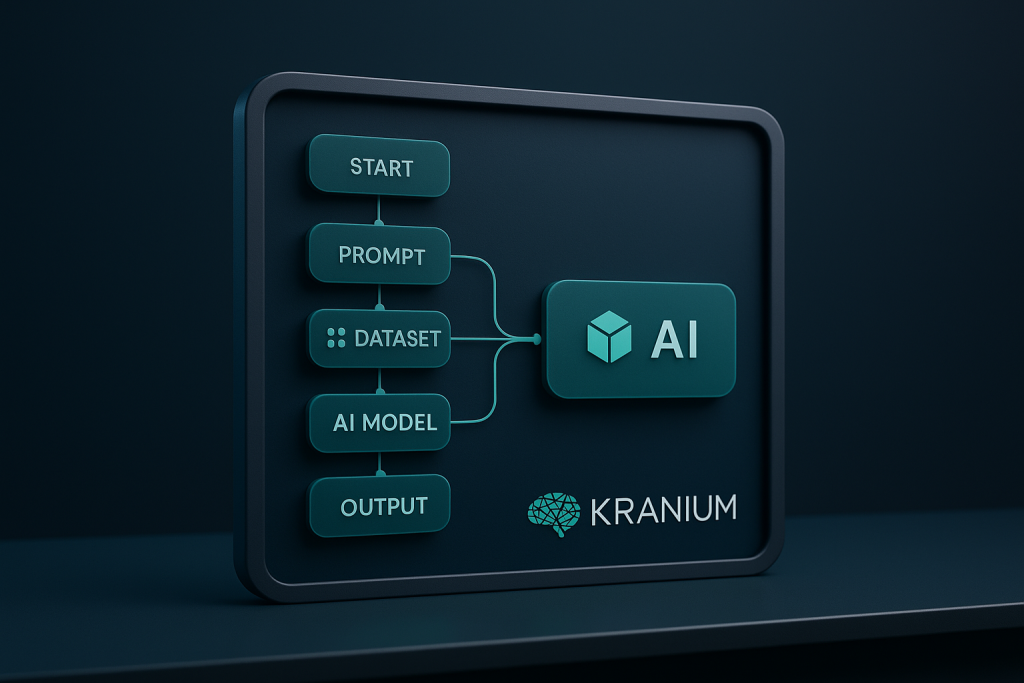
- Multi-model orchestration: use and govern multiple models within a single platform.
- Governance by default: RBAC, audit trails, policy enforcement, and explainability.
- Deep data integration: secure access to enterprise systems without custom glue code.
- Production-first architecture: deployment, monitoring, and lifecycle management built in.
- Enterprise alignment: supports regulated industries and long-term AI operating models.
How to Evaluate No-Code AI Platforms in Practice
- Test with real enterprise data—not synthetic demos.
- Evaluate governance features under realistic compliance scenarios.
- Measure how easily workflows move from pilot to production.
- Assess collaboration between business, data, and compliance teams.
- Review vendor roadmap and long-term support posture.
Conclusion
In 2026, the best no-code AI platforms are not about speed alone. They are about control, clarity, and sustainable execution.
Organizations that succeed with AI will be those that choose platforms capable of delivering governed, explainable, and repeatable systems—without scaling engineering teams or increasing risk.
For enterprises seeking a unified approach to AI delivery, governance, and scale, Kranium provides the foundation to turn AI strategy into operational reality.